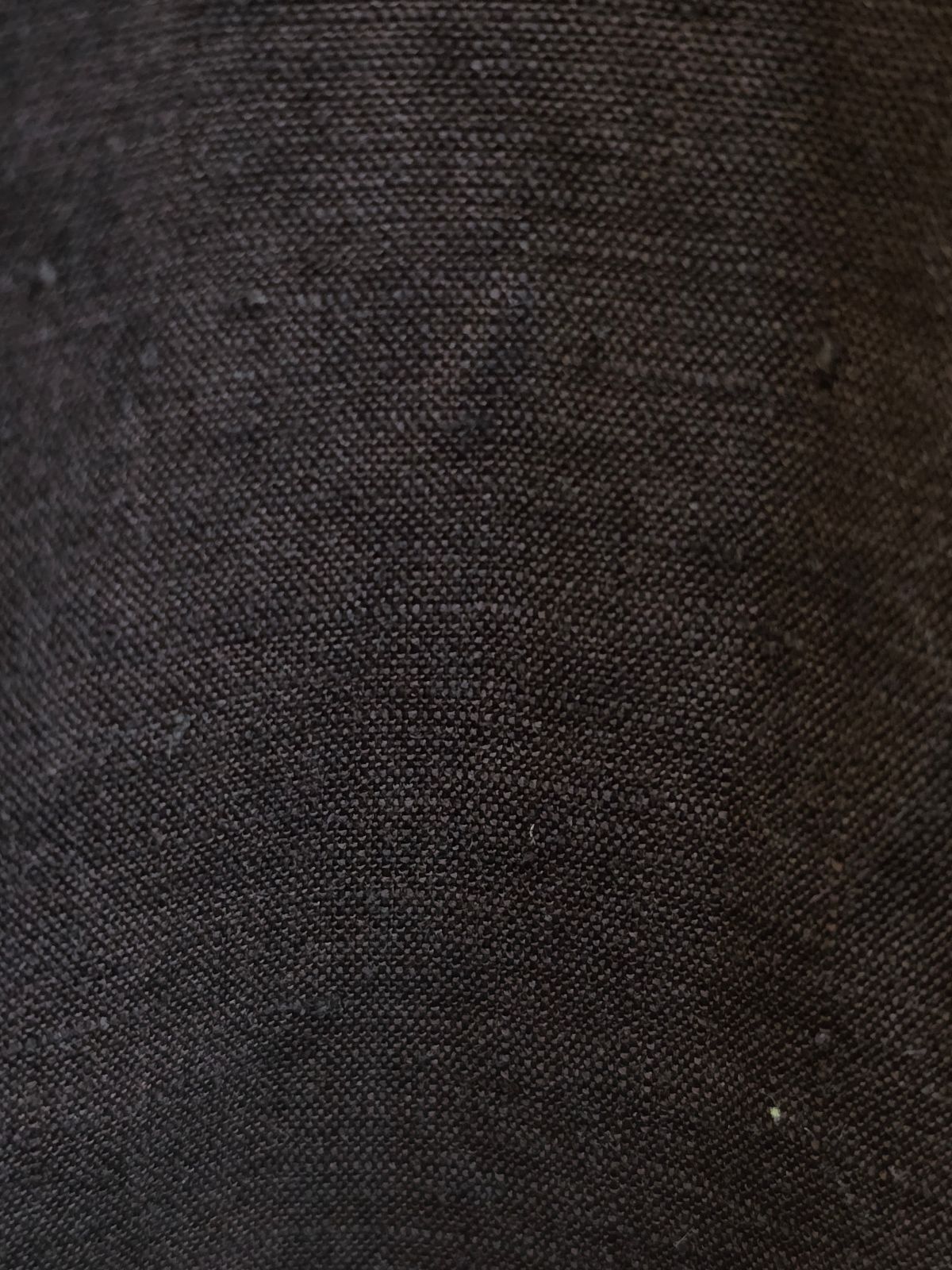
on the weight of linen
fabrics are a delicate subject. not only literally but also in understanding and appreciating. personally, I find fabrics very much related to the seasons and even more to their weight. wools in winter but lightweights in autumn and spring. perhaps even a cold summer night. same with cotton, which has such a wide range of weaves, weights and ways to wear, that it's basically a year-round material.
linen hits different.
in my early days, I mainly wore linen as shirting material. lightweight, crinkly, sensitive to shrinking. always a bit shabby.
over time, I've gotten more accustomed to heavier linens as used by makers such as Daniel Gu of MotivMfg. and Evan Kinori.
thick cloth, heavyweights, a very clear weaving structure. less shabby, more of an elegant worn-in look. like the coming of age of both the cloth and the wearer. softening over time, showing patina through ways of wearing and the life it lives. the fabric remembered by the hands, the body.
linen is somewhat under appreciated. we tend to strictly see it as a lightweight summer material, not so much a fabric that has more purpose in other moments of the year.
however, since its usage in ancient Egypt, linen (cultivated from flax) has always held a domination position in civilizations and is one of the best preserved cloths from these ancient times. a long, strong and naturally lustrous fiber that absorbs dye tremendously, showing depth in color which is impossible in synthetic fabrics.
over time, the richness of linen has somewhat faded as the industry focused more on technical materials instead of exploring the qualities of linen.
makers such as Evan Kinori and MotivMfg., and also Calmlence, shine a new light on the wide range of possibilities with linen.
the weave of linen is what gives it its particular hand. its character. the details that set it apart and make you question which fabric you're touching. woven in a plain or twill structure, or the occasional herringbone, it is exactly that which gives the cloth its specific structure. whether it is the fineness and super high density achieved, or the rigid open weave in a heavyweight, the weave makes all the difference. textures in weaving natural fibers, its irregularities, they are to be embraced. this is what shows the hand of the maker, the work on the antique loom, the knotted threads in the weave.
honest work, in collaboration with nature.